Archive

March 2, 2026

Browsing

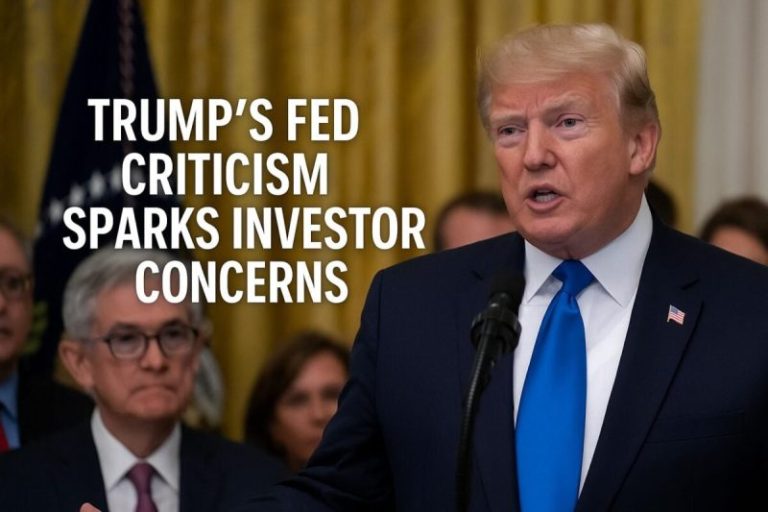
Trump’s Fed Criticism Sparks Investor Concerns

The recent spotlight on Trump’s Fed Criticism has sparked unease among investors and financial analysts alike. President Donald Trump’s repeated public attacks on Federal Reserve Chair Jerome Powell have amplified concerns over the central bank’s independence. As a result, markets have reacted with volatility, and investor sentiment has taken a noticeable hit.

Market Reactions to Political Pressure

Wall Street’s response to Trump’s Fed Criticism was swift. Major stock indices, including the S&P 500 and Nasdaq, posted losses amid uncertainty over future monetary policy decisions. Investors fear that political attempts to sway the Federal Reserve’s agenda may undermine its objectivity. If monetary policy is dictated by short-term political goals rather than long-term economic data, the implications could be severe for inflation, interest rates, and overall economic health.

Why Federal Reserve Independence Matters

One of the cornerstones of a stable economy is a politically neutral central bank. Trump’s Fed Criticism has called that neutrality into question. The Federal Reserve must be able to act without external pressure to maintain credibility in the eyes of global markets. Political interference could compromise its ability to control inflation or manage unemployment rates effectively.

Investor Sentiment and Future Outlook

Investor confidence remains fragile. Many market participants have shifted assets into safer investments such as gold and U.S. treasuries, seeking shelter from potential turmoil. Economic advisors stress the importance of maintaining clear, data-driven policy guidance, especially as the U.S. navigates ongoing trade issues and inflation concerns.

In the coming weeks, the Federal Reserve’s actions will be closely watched. Should Trump’s Fed Criticism intensify, it could further erode market stability and investor trust in U.S. monetary policy.

Source: Yahoo Finance


The post Trump’s Fed Criticism Sparks Investor Concerns appeared first on FinanceBrokerage.

Oil Prices Rebound After Trump’s Criticism of Fed Chair Powell

On April 22, 2025, oil prices rebound experienced a modest rebound following a significant drop the previous day. The initial decline was triggered by President Donald Trump’s renewed criticism of Federal Reserve Chair Jerome Powell, which unsettled financial markets and raised concerns about the central bank’s independence.

Market Reaction to Political Commentary

President Trump’s comments on Monday intensified investor fears regarding the Federal Reserve’s autonomy in setting monetary policy. The criticism led to a broad sell-off in equities and commodities, with oil prices bearing the brunt of the market’s anxiety.

Short-Covering Leads to Price Recovery

Despite the initial plunge, oil prices rebound edged higher on Tuesday as investors engaged in short-covering. Brent crude futures rose 0.5% to $66.62 per barrel, while West Texas Intermediate (WTI) crude for May delivery increased by 1% to $63.73 per barrel. The more actively traded WTI June contract also gained 0.7% to $62.84 per barrel.

Ongoing Economic Concerns

Market participants remain cautious amid ongoing fears of a potential recession linked to U.S. tariff policies and concerns over Federal Reserve independence. These factors have increased worries about the U.S. economy and crude demand. Additionally, progress in U.S.-Iran nuclear deal talks has eased supply concerns, potentially impacting oil prices further.

As the situation evolves, investors will closely monitor geopolitical developments and central bank communications to assess the potential long-term impacts on the energy markets.

Source: BloomBurg

The post Oil Prices Rebound After Trump’s Criticism of Powell appeared first on FinanceBrokerage.

CHICAGO — Cardi B was part of Bad Bunny’s Super Bowl halftime show. What she did exactly, well, that turned into a perplexing question for two major prediction markets.

At least one Kalshi trader filed a complaint with the Commodity Futures Trading Commission over how the prediction market handled Sunday’s appearance by the Grammy-winning rapper. The result of a similar event contract on Polymarket also drew the ire of some users on that platform.

Prediction markets provide an opportunity to trade — or wager — on the result of future events. The markets are comprised of typically yes-or-no questions called event contracts, with the prices connected to what traders are willing to pay, which theoretically indicates the perceived probability of an event occurring.

The buy-in for each contract ranges from $0 to $1 each, reflecting a 0% to 100% chance of what traders think could happen.

More than $47.3 million was wagered on Kalshi’s market for “ Who will perform at the Big Game? ” A Polymarket contract had more than $10 million in volume.

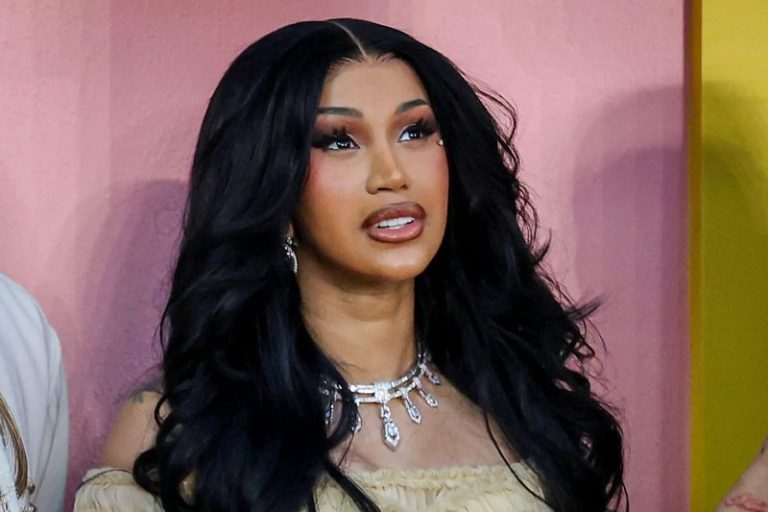
Celebrities including Pedro Pascal, Karol G and Cardi B during the Super Bowl halftime show on Sunday.Kevin Mazur / Getty Images for Roc Nation

Cardi B joined singers Karol G and Young Miko and actors Jessica Alba and Pedro Pascal on a starry front porch during the halftime spectacle. She danced to the music, but it was unclear whether she was singing along during the show, which included performances by Ricky Martin and Lady Gaga.

Due to “ambiguity over whether or not Cardi B’s attendance at the 2026 Super Bowl halftime show constituted a qualifying ‘performance,’” Kalshi cited one of its rules in settling the market at the last price before trading was paused: $0.74 for No holders and $0.26 for Yes holders. The platform returned all the money to its users.

Polymarket’s contract was resolved as Cardi B had performed, but the yes was disputed. A final decision on the contract is expected to be announced on Wednesday.

In the CFTC complaint — first reported by the Event Horizon newsletter and posted by Front Office Sports — the trader alleges that Kalshi violated the Commodity Exchange Act with how it resolved the Cardi B contract. The trader — a Yes holder — is seeking $3,700.

A CFTC spokesman declined comment on Wednesday.

The Super Bowl capped a big NFL season for prediction markets.

Kalshi reported a daily record high of more than $1 billion in total trading volume on the day of the game, an increase of more than 2,700% compared to last year’s Super Bowl. The season-long total for all Super Bowl winner futures was $828.6 million, up more than 2,000% from last year.

The increased activity on Sunday caused some deposit issues. Kalshi co-founder Luana Lopes Lara posted on X on Monday that the “traffic spike was way bigger than our most optimistic forecasts.” She said the platform had reimbursed processing fees on the effected deposits and added credits to users who experienced delays.

Robinhood Markets highlighted the strength of its prediction markets when it announced its financial results for the fourth quarter and full 2025 on Tuesday.

“I think we are just at the beginning of a prediction market super cycle that could drive trillions in annual volume over time,” CEO Vlad Tenev said during an earnings call. “This year is going to be a big year. Olympics are going on right now. World Cup coming in the summer.”

This post appeared first on NBC NEWS

The head of the Justice Department’s antitrust unit said Thursday she is leaving the role, effective immediately, at a critical moment for corporate mergers in America.

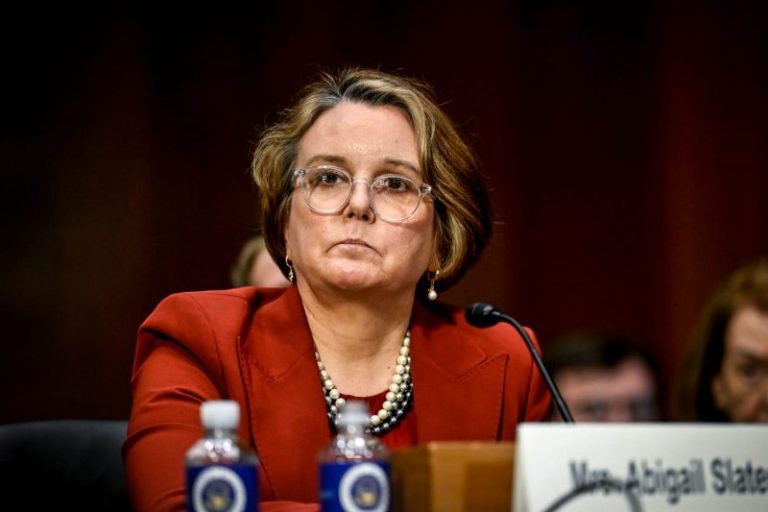
Gail Slater, the assistant attorney general in charge of the Antitrust Division, wrote on X: ‘It is with great sadness and abiding hope that I leave my role as AAG for Antitrust today.’

Slater continued, ‘It was indeed the honor of a lifetime to serve in this role. Huge thanks to all who supported me this past year, most especially the men and women of’ the Department.

The White House referred questions to the Justice Department.

Attorney General Pam Bondi said in a statement, “On behalf of the Department of Justice, we thank Gail Slater for her service to the Antitrust Division which works to protect consumers, promote affordability, and expand economic opportunity.”

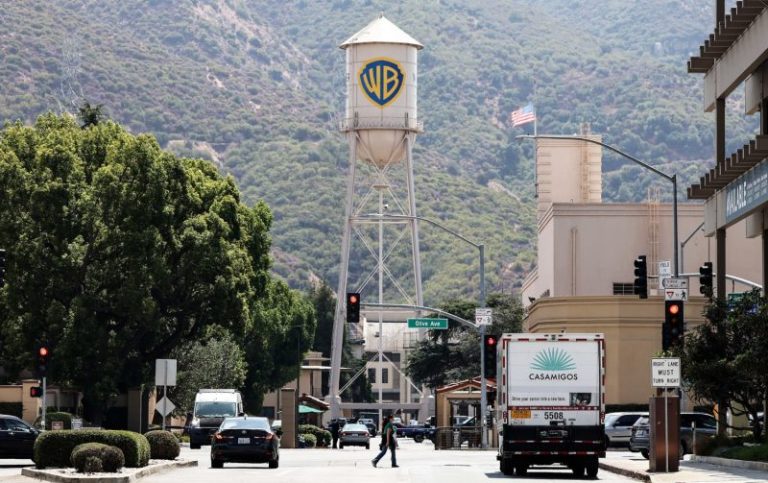
Slater is leaving just as media giants Netflix and Paramount Skydance battle for control of Warner Bros. Discovery.

President Donald Trump had said he was going to get involved in reviewing whichever Warner Bros. deal proceeds, an uncommon occurrence in antitrust matters.

But in an interview with NBC News, Trump slightly changed his tune. ‘I’ve been called by both sides, it’s the two sides, but I’ve decided I shouldn’t be involved,’ he said.

‘The Justice Department will handle it.’

Trump has met with executives from both of Warner Bros.’ bidders.

The Justice Department will also head to court in weeks in a bid to challenge concert venue manager Live Nation’s ownership of Ticketmaster.

Shares of Live Nation jumped as much as 5.8% after Slater announced her departure. By 1 p.m. ET, the rally had abated to around 2.5%.

When the Senate confirmed Slater, 78 senators from both sides of the aisle voted in her favor. Only 19 opposed her confirmation.

This week, her deputy in the Antitrust Division also departed.

Mark Hamer, deputy assistant attorney general for the Antitrust Division, wrote on LinkedIn, ‘Decided the time is right for me to return to private practice.’ He praised Slater as a ‘leader of exceptional wisdom, strength and integrity.’

This post appeared first on NBC NEWS

Warner Bros. Discovery said Tuesday that it was reopening talks with Paramount Skydance, giving the studio a week to rival Netflix in its bid to take over the streaming and cable giant.

In a statement, Warner Bros. Discovery said it had rejected the latest $30-a-share offer from Paramount but would give the company until Monday ‘to make its best and final offer.’

It also said a ‘senior representative’ of Paramount had indicated that the CBS owner would be willing to meet an even higher price, $31 a share, seemingly enticing the board back to the table.

At the same time, Warner Bros. is still recommending its shareholders vote at a special meeting March 20 to approve the $82.7 billion deal it reached in December to sell its streaming service, studio and HBO cable channel to Netflix.

Paramount is seeking to buy the entirety of Warner Bros. Discovery.

‘Every step of the way, we have provided [Paramount Skydance] with clear direction on the deficiencies in their offers and opportunities to address them,’ David Zaslav, CEO of Warner Bros. Discovery, said in the statement.

In a letter to the Paramount board — chaired by David Ellison, also the company’s CEO and controlling shareholder — Warner Bros. said that while Paramount had indicated it would address ‘unfavorable terms and conditions,’ these had not yet been removed from the proposed merger agreement.

Warner Bros. has repeatedly rejected previous bids from Paramount, citing the ‘insufficient value’ offered.

In a separate statement, Netflix hit out at what it called Paramount’s ‘antics.’

‘Throughout the robust and highly competitive strategic review process, Netflix has consistently taken a constructive, responsive approach with WBD, in stark contrast to Paramount Skydance,’ it said.

Netflix said that it was ‘confident that our transaction provides superior value and certainty’ but also recognized ‘the ongoing distraction for WBD stockholders and the broader entertainment industry caused by’ Paramount. The company said it granted Warner Bros. the one-week window to reopen talks with Paramount to ‘fully and finally resolve this matter.’

Netflix also took aim at the regulatory process required for either company to complete a takeover.

It said that Paramount has ‘repeatedly mischaracterized the regulatory review process by suggesting its proposal will sail through.’

‘WBD stockholders should not be misled into thinking that PSKY has an easier or faster path to regulatory approval — it does not,’ Netflix said.

In a statement, Paramount Skydance reiterated its existing offer to Warner Bros. Discovery of $30 per share. The company did not indicate if it would submit a higher bid.

Paramount called the one-week negotiating window ‘unusual’ but said it ‘is nonetheless prepared to engage in good faith and constructive discussions.’

The Ellison-backed media giant also said it would continue advocating against the Netflix deal and submit a slate of directors for Warner Bros.’ board at the upcoming shareholder meeting, as it previously planned to.

President Donald Trump, whose administration approved Ellison’s takeover of Paramount last year, said early in the bidding process he would be involved in approving a deal with Warner Bros.

But earlier this month, Trump changed his tune. ‘I’ve been called by both sides, it’s the two sides, but I’ve decided I shouldn’t be involved,’ he told ‘NBC Nightly News’ anchor Tom Llamas.

Trump still hinted that one company looked problematic to him. ‘I mean, there’s a theory that one of the companies is too big and it shouldn’t be allowed to do it,’ he said.

‘They’re beating the hell out of each other and there’ll be a winner,’ Trump said.

Warner Bros. has an archive of storied movies, as well as a diverse portfolio of brands including CNN and HBO.

The bidding war for the media empire comes at a pivotal time for the entertainment industry, with traditional broadcasters and studios facing serious challenges from digital newcomers Netflix, Apple and Amazon.

Since Netflix announced its deal to buy parts of Warner Bros. Discovery, its shares have tumbled nearly 25%.

This post appeared first on NBC NEWS
The Commodity Futures Trading Commission (CFTC) is stepping in to stop what it calls an “onslaught” of state-level regulation of prediction markets.

CFTC Chairman Michael Selig said Tuesday in a video posted on X that the agency has filed a “friend of the court brief” in support of Crypto.com in its escalating legal battle with regulators in Nevada.

The move is significant because it marks the first time under Selig that the CFTC has taken sides in what is shaping up to be an epic fight between regulators and prediction markets, platforms that allow users to trade contracts tied to a wide range of events, from local elections to the Super Bowl.

By intervening, Selig’s CFTC is effectively arguing that prediction markets are federally regulated and not subject to state-level gambling laws.

“Over the past year, American prediction markets have been hit with an onslaught of state-led litigation,” Selig said in the video.

“The CFTC will no longer sit idly by while overzealous state governments undermine the agency’s exclusive jurisdiction over these markets by seeking to establish statewide prohibitions on these exciting products,’ said Selig.

The debate over how the platforms should be regulated comes as they explode in popularity. Kalshi said Super Bowl 60 generated more than $1 billion in total trading volume — a 2,700% increase from last year.

It’s a fight with broad implications and high stakes. Over the past year, several states including Massachusetts and Nevada have moved to restrict prediction markets, filing lawsuits, issuing cease-and-desist letters and arguing that the platforms amount to unlicensed gambling.

Utah’s Republican governor, Spencer Cox, said in a post on X Tuesday that he will use “every resource” within his disposal to “beat” Selig in court.

“These prediction markets you are breathlessly defending are gambling—pure and simple,” he said. “They are destroying the lives of families and countless Americans, especially young men. They have no place in Utah.”

Meanwhile, Cox’s fellow Republican, Sen. Bernie Moreno of Ohio, issued his support of Selig’s announcement on X. “Clear lines of delineation and clarity on regulations is essential for American led innovation,’ he said.

Selig’s move comes days after a group of Democratic senators led by Nevada’s Catherine Cortez Masto sent the chairman a letter urging the CFTC to ‘abstain from intervening in pending litigation involving contracts tied to sports, war, or other prohibited events.’

As states attempt to rein in these fast-growing platforms, the question is no longer simply whether these products amount to gambling. It’s who gets to decide that question.

Industry advocates argue that the platforms aren’t gaming, which is traditionally regulated by states. Instead, they claim the prediction markets are financial exchanges that fall under the CFTC’s purview, where users trade contracts with one another. and don’t bet against a “house.” The exchanges don’t set odds or take the opposite side of trades. Instead, they collect transaction fees, similar to a brokerage.

In the video, Selig said prediction markets allow Americans to “hedge commercial risks like increases in temperature and energy price spikes,” and they act as “an important check on our news media and our information screens.”

He ended the video with a warning directed at the state attorneys general who are on the front lines of the legal fights to regulate prediction markets: “To those who seek to challenge our authority in this space, let me be clear: We will see you in court.”

This post appeared first on NBC NEWS

Los Angeles County filed a civil lawsuit against Roblox, alleging that the platform markets itself as a gaming experience for children but has created a ‘largely unsupervised online world’ that allows adults to mingle with minors with very little oversight.

The lawsuit says that Roblox’s architecture makes it easy for adults to masquerade as children in order to target them.

‘Beneath the bright animation and cheerful branding lies an environment in which child predators can readily locate, contact, and interact with minors through Roblox-enabled features and defaults, and where age-inappropriate sexual content and sexually themed interactions and experiences can be assessed and disseminated through Roblox’s functionality and tools, leaving minors to navigate dangers they do not and cannot understand,’ the lawsuit says.

The suit was filed on Thursday and asks that Roblox be ordered to pay a civil penalty of up to $2,500 for each violation of the Unfair Competition and False Advertising laws. It also asks that Roblox cover the county’s legal fees.

Roblox said in a statement that it disputes the county’s claims ‘and will defend against it vigorously.’

‘Roblox is built with safety at its core, and we continue to evolve and strengthen our protections every day,’ a company spokesperson said. ‘We have advanced safeguards that monitor our platform for harmful content and communications, and users cannot send or receive images via chat, avoiding one of the most prevalent opportunities for misuse seen elsewhere online.’

The company said safety remains a top priority and takes ‘swift action against anyone found to violate our safety rules.’

The lawsuit, however, accuses Roblox of failing to implement safety measures, including age verification, default communications restrictions and effective reporting mechanisms.

‘These fixes are obvious, easy, and long overdue,’ it says.

The county said in its suit that it has had to ‘expend, divert and increase resources to address rising rates of child sexual exploitation, trafficking, abuse and mental health trauma.’

‘By taking actions that increase the costs of law enforcement, child protective services, victim services, mental health counseling, and other public services, Roblox has diverted taxpayer dollars away from other critical public programs and services,’ the suit alleges.

Roblox said in its statement that as of January, it requires all users to undergo a facial age check to use the chat feature, and that chat users are placed into age groups.

Parents are given control over whether their child can access the chat feature, can block specific users and games, and can set screen time limits. The company also said it does not allow users to send images or videos via chat.

‘There is no finish line when it comes to protecting kids, and while no system can be perfect, our commitment to safety never ends,’ Roblox said.

Since its launch in 2006, Roblox has grown to become a massive global success. It has 144.5 million daily active users with over 35 billion engagement hours, its website states.

According to its most recent shareholder letter for Quarter 4, revenue grew 36% year-over-year to $4.9 billion and generated $1.8. billion in operating cash flow in fiscal 2025.

This was due to the addition of about 60 million daily active users from Quarter 4 of 2024 to Quarter 4 of 2025, the letter says.

Over the years, the gaming platform has been at the center of several lawsuits, including one filed last year where a California woman alleged that her teenage son was groomed and coerced to send explicit images on Roblox and Discord. The suit was filed after the boy took his own life in April 2024.

Attorneys for the mother said the boy was targeted by “an adult sex predator” who posed as a child on Roblox. The lawsuit alleged that the conversation between the boy and the man escalated to include “sexual topics and explicit exchanges.” The man eventually encouraged the boy to move the conversation to Discord, demanded that the boy share explicit videos and images, and then threatened to post them, the lawsuit alleged.

Both companies said at the time that it does not comment on legal matters. The case is still pending.

Louisiana Attorney General Liz Murrill also sued the platform last year, alleging that it was “the perfect place for pedophiles” due to its failure to implement strong safety protocols. Roblox denied her claims and said it was committed to working with the prosecutor’s office to keep children safe.

This post appeared first on NBC NEWS