Archive

May 29, 2026

Browsing

For years, California Gov. Gavin Newsom has reaped the benefits of Silicon Valley’s AI boom — in the form of tax revenue for his state and political contributions from industry leaders.

Newsom’s interests often aligned with those of tech titans, and he largely protected those interests. In 2024, for example, he vetoed a bill that would have created legal liabilities for artificial intelligence companies in the event of catastrophes involving terrorism, mass casualties or other damage to society. It would also have required the companies to maintain kill switches so that AI processes could be turned off.

Newsom has long talked about the need to find a practical balance between utopian corporate visions of AI’s upsides and dystopian populist nightmares of human subservience to machines.

“Given the stakes — protecting against actual threats without unnecessarily thwarting the promise of this technology to advance the public good — we must get this right,” he said in his veto message.

But as he lays the groundwork for a widely anticipated 2028 presidential bid, Newsom is shifting his weight away from the corporate end of the balance and toward the populist end. The move could have implications not only for the Democratic nomination fight, but also in a general election, as the political left and right have coalesced around concerns about AI driving up costs to consumers and posing threats to liberty, cybersecurity and physical safety.

The issue has bedeviled elected officials in both parties at the federal and state levels.

They are clearly feeling heat from the public over a wide variety of AI-related issues, from potential job losses, the expensive energy demands of data centers and sexual exploitation, to more abstract fears of Americans’ lives being run by a handful of the rich and powerful through the use of advanced machines.

On the other side, tech giants bring in money — and spend lavishly on campaigns — and national security experts warn that unilateral disarmament in the AI arms race is a recipe for disaster.

Last week, President Donald Trump scuttled his own planned executive order on AI regulation at the last minute, citing concerns that it might “get in the way” of the country’s ability to compete with China.

At the same time, Newsom is using his power as California’s chief executive to begin rolling out initiatives to beef up AI controls.

Jason Elliott, a policy-minded political consultant who served as Newsom’s deputy chief of staff, said the governor has had his hands deep in AI policy, whether it’s the frontier-safety law he backed last year — which requires major AI developers to identify and mitigate risks before deploying their products — or the legislation he vetoed the year before.

“Just because you can name a problem and take a problem very seriously doesn’t mean that every single solution someone proposes is proper,” Elliott said. “I have never seen an issue move as quickly as AI, and it’s not even close. So every elected official’s position naturally should be evolving on AI from week to week and month to month, because the underlying technology itself seems to change every day.”

Newsom is evolving in real time, to the delight of some progressives who believed he was dragging his feet on behalf of corporations and donors.

Last week, Newsom signed an executive order requiring state agencies to work with industry groups, academics and organized labor to develop plans for assessing and offsetting AI’s effects on California workers.

“The whole system has to be reimagined, and we’re not — I don’t think we’re having an accelerated or advanced conversation right now; we’re still discussing who’s going to pay for my increased electricity because of the data center, which is a legit issue,” Newsom said at a May 19 conference convened by the liberal think tank Center for American Progress in Washington. “But it’s not the issue, and … the tech genie is not going to go back in the bottle.”

Newsom also submitted a revised state budget proposal this month that would vastly increase antitrust enforcement dollars, which have been used to go after companies that use algorithms to set prices.

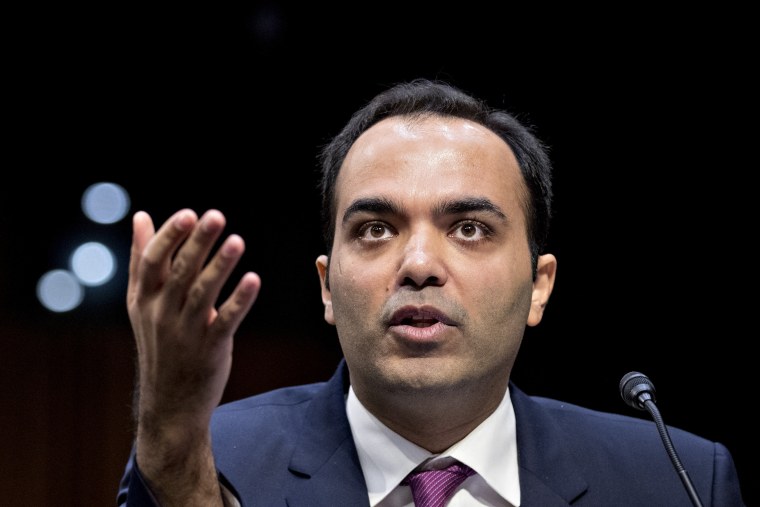
Former Consumer Financial Protection Bureau chief Rohit Chopra.Andrew Harrer / Bloomberg via Getty Images file

Earlier this month, he hired former Consumer Financial Protection Bureau chief Rohit Chopra, who has warned about potential excesses of AI, to head up a state business and consumer services agency. And, along with other prospective 2028 candidates, according to Axios, Newsom has been cozying up to Sen. Elizabeth Warren, D-Mass., who is among the loudest critics of AI’s economic implications.

Among the large crop of prospective 2028 hopefuls, there is a broad spectrum of views on AI and its various uses — and some uncertainty about when and how to regulate them. Data centers, which represent just a slice of AI policy, have become a flashpoint for voters and an area of attention for policymakers with White House ambitions.

Pennsylvania Gov. Josh Shapiro, for example, is tying accelerated permits for data centers to companies’ willingness to pay for power, provide workforce protections and conserve the environment. Rep. Alexandria Ocasio-Cortez, D-N.Y., has called for a moratorium on data centers and pressed federal officials on their impact on drinking water.

Like Newsom, Illinois Gov. JB Pritzker, who is also widely considered to be looking at a 2028 bid, is moving to demonstrate a more cautious approach to AI. In February, he proposed a two-year pause on tax incentives for building data centers.

A YouGov/Economist poll this month found that 71% of Americans — 77% of Democrats and 68% of Republicans — say AI development is “moving too fast.”

“It should be clear to anyone paying attention to polling or even just vibes that there is a lot of voter-level concern about AI and costs and who the economy is serving and who the economy isn’t serving,” Dan Geldon, a former top aide to Warren, said. “It makes sense that Newsom and other candidates would open channels with populists and consider their ideas in this environment.”

But revenue from “hyperscalers” — tech companies that build data centers to handle massive amounts of information — is attractive to many state executives in both parties.

“We’re looking at literally hundreds of millions of dollars annually to local government, cities, counties and school districts that the hyperscaler is going to pay in their fee and loop payments,” Mississippi Gov. Tate Reeves, a Republican who has welcomed data center investments from Amazon, xAI and other major players into his state, said in a recent interview.

And yet there are Republican governors who have taken a much more skeptical view of AI and of data centers.

Florida Gov. Ron DeSantis, a Republican, has pushed unsuccessfully to enact an AI “bill of rights” that would protect data privacy and prevent insurance companies from judging claims based on machine-dictated decisions. Like Reeves, he signed a law requiring hyperscalers to pay utility costs associated with their work.

For 2028 hopefuls in both parties, the opportunities and risks of developing AI policies at machine-learning speed are becoming more clear. For Newsom, there’s been a perceptible shift toward the populist leanings of the progressive wing of his party.

Elliott, his former aide, said it makes sense on a public policy level for the governor to keep up with changes in technology and adjust his response accordingly.

“It’s true that Gov. Newsom has continued to observe the state of the industry, the state of technology, and then update his perspectives as the industry moved forward,” Elliott said. “Republicans are doing the same thing and should be doing the same thing and there are a number of Republicans around the country who are taking the very hands-on approach to regulating artificial intelligence.”
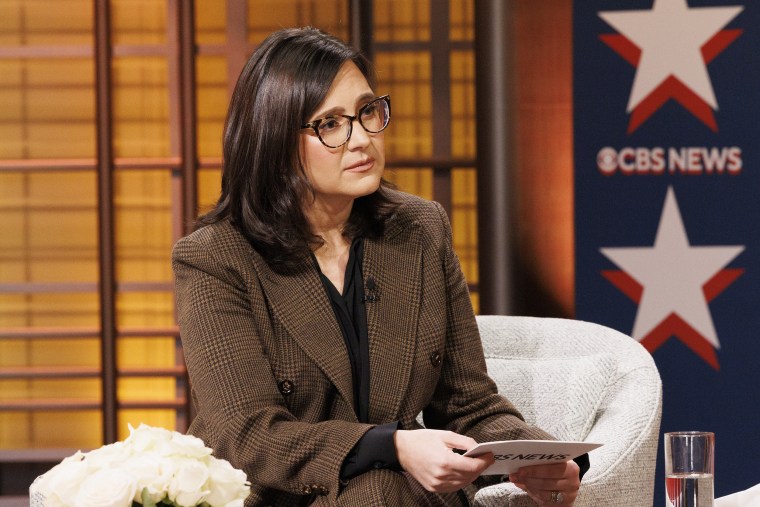
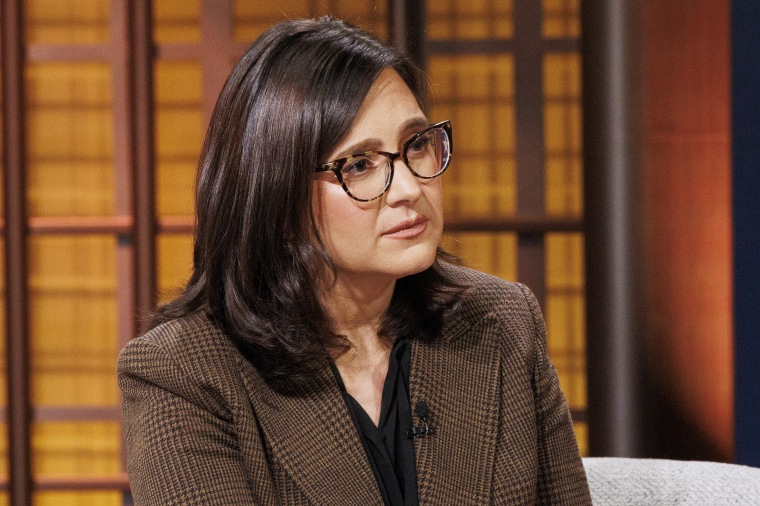
CBS News has reportedly declined to renew its contract with Sharyn Alfonsi, the “60 Minutes” correspondent whose segment about the Trump administration deporting Venezuelan men to a prison in El Salvador was abruptly pulled off the air late last year.

Alfonsi confirmed the expiration of her CBS News deal in an interview with The New York Times published Wednesday. CBS News and Alfonsi did not immediately respond to NBC News’ requests for comment on the matter.

“It sends a chilling message to the entire newsroom,” Alfonsi told the Times. “I think it was a deliberate choice to penalize a journalist for refusing to sanitize accurate reporting.”

“60 Minutes” ultimately aired Alfonsi’s segment in January after a last-minute postponement in late December that the correspondent had claimed was “not an editorial decision” but “a political one.”

The segment featured interviews with men who were deported from the U.S. to the Center for the Confinement of Terrorism, or CECOT, in Tecoluca, El Salvador. The interviewees described torture and physical and sexual abuse at the complex.

In an editorial call Dec. 22, the morning after “Inside CECOT” was pulled from the “60 Minutes” lineup, CBS News Editor-in-Chief Bari Weiss said she had held the story “because it was not ready,” according to a source.

CBS News Editor-in-Chief Bari Weiss moderates a town hall with Erika Kirk on Dec. 10.CBS via Getty Images file

“While the story presented powerful testimony of torture at CECOT, it did not advance the ball — the Times and other outlets have previously done similar work,” Weiss told CBS News staffers, according to that source.

Weiss is a former opinion writer and editor at the Times who launched the website The Free Press in 2021. Paramount Skydance, which owns CBS, acquired The Free Press and hired Weiss as editor-in-chief of CBS News in October.

Alfonsi, who made her “60 Minutes” debut in 2015, continued to appear on the newsmagazine through the end of its 58th season, which concluded May 17.

She is the second “60 Minutes” correspondent to exit the show since Weiss became top editor at CBS News, following Anderson Cooper, who signed off this month after 20 years on the broadcast.

In a farewell message that aired this month, Cooper said in part: “The independence of ‘60 Minutes’ has been critical, and I think the trust it has with viewers is critical to the success of ‘60 Minutes.’”

MIAMI — A federal judge on Wednesday declined to jail a Florida teenager accused of killing and sexually assaulting his stepsister, allowing him to remain in the custody of a family member while he awaits trial.

Timothy Hudson, 16, has been free since the slaying of Anna Kepner, who died on Nov. 7, 2025, aboard a Carnival cruise ship. At the time he was arrested and charged as a juvenile and allowed to live with an uncle because of his age. But in April a federal grand jury indicted him as an adult, introducing the possibility that he could be jailed as he awaits trial.

“If it were a 20-year-old under the exact circumstances I probably would have detained,” U.S. District Judge Edwin Torres said. “The presumption would be we were just not going to take that chance.”

“This is a different animal,” Torres said.

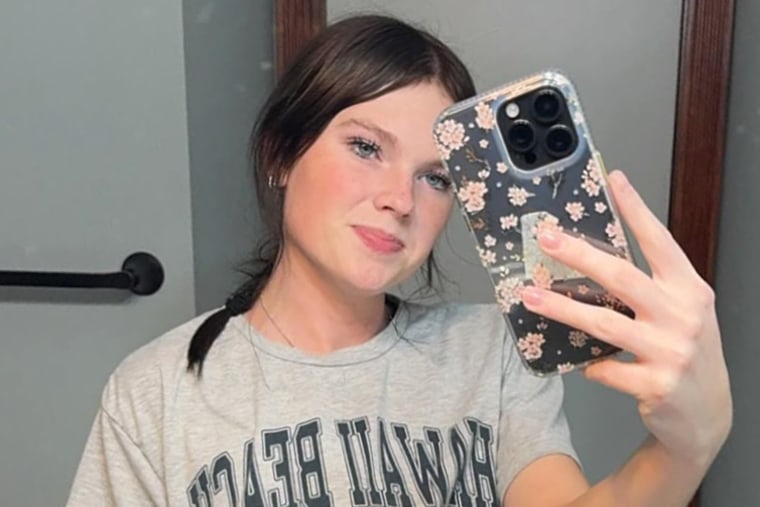
Anna Kepner.anna.kepner16 via Instagram

Torres took into consideration that detaining Hudson in Miami-Dade County — where he was charged — would make it difficult for his family, which lives hundreds of miles away in Hernando County, to visit him.

The judge said he wanted to “know what my options are” about potentially detaining Hudson closer to home before deciding to hold him behind bars.

Alejandra Lopez, a lawyer for the government, argued that Hudson is “a danger to the community” and questioned how authorities can trust “this defendant won’t act again.”

She noted that two minors live in Hudson’s uncle’s home, where he is residing.

“What is needed to prove a danger? A second dead body?” she asked.

Evan Kuhl, a public defender representing Hudson, argued that his client is not a danger to the public or a flight risk because he has abided by the conditions of his release for several months without any incidents.

Lopez shot back that it took months after Kepner’s death for officials to charge Hudson because authorities were gathering evidence.

“How is he going to be a risk of flight if he doesn’t even know if he’s going to be charged?” she asked. “That doesn’t make sense.”

Hudson is only allowed to leave his house with his uncle or aunt and will be electronically monitored by authorities.

Anna Kepner’s car, decorated by her classmates at Temple Christian School, remained in the school parking lot in Titusville, Fla., for weeks after her death. Malcolm Denemark / USA Today Network via Imagn

The November cruise vacation included the victim’s father, stepmother and two of her children, including Hudson. Kepner’s father and Hudson’s mother married in December 2024.

Kepner’s body was found wrapped in a blanket, bruised and under a bed in her room, concealed by life vests. Her death was ruled a homicide caused by “mechanical asphyxiation,” according to the Miami-Dade medical examiner.

The girl and her stepbrother were sharing a room on the cruise, according to Hudson’s father’s lawyer.

The teenager was arrested while the ship was in international waters en route to Miami. He was hospitalized upon the ship’s docking and has since been in counseling, according to a lawyer for his mother.

On the day Hudson’s indictment was made public, Chris Kepner — Anna Kepner’s father and Hudson’s stepfather — declared that “justice needs to be served.”

Kepner was a high school senior and cheerleader, with hopes of cheerleading for the University of Georgia. She was remembered in her obituary for lacking a filter and being “bubbly, funny, outgoing, and completely herself.” At the time, her family said that “in true Anna fashion, the family would like everyone to know there is no GoFundMe” for her funeral. She was set to graduate from high school this spring.

Hudson’s trial could begin in September, Lopez said Wednesday.

CBS News editor-in-chief Bari Weiss on Thursday replaced Tanya Simon, the executive producer of the network’s flagship newsmagazine “60 Minutes,” with a technology journalist who has never worked in television news.

Nick Bilton, a documentarian and former New York Times technology columnist, will take over for Simon when the show returns for a 59th season in the fall, CBS News leaders announced.

The moves are part of Weiss’ sweeping shake-up of the storied program, created by the legendary producer Don Hewitt.

CBS News has also cut ties with “60 Minutes” correspondent Cecilia Vega, who joined the show in 2023, according to a source familiar with the matter.

Sharyn Alfonsi, another “60 Minutes” correspondent, told the Times this week that CBS News had not renewed her contract. CBS News and Alfonsi did not respond to multiple requests for comment on the status of her deal.

Alfonsi clashed with Weiss late last year over the last-minute postponement of her segment about the Trump administration deporting Venezuelan men to a notorious prison in El Salvador.

Alfonsi said the delay was “not an editorial decision” but a “political one.” Weiss said she held the story “because it was not ready.” It ultimately aired in January.

Weiss — who also had no TV news experience when she was hired last fall — said in a statement that Bilton was “one of the most entrepreneurial journalists of our time and the perfect leader for one of the most entrepreneurial news brands of all time.”

Bari Weiss, CBS News’ editor-in-chief.Michele Crowe / CBS via Getty Images file

“We have huge ambition for ‘60 Minutes’ to reach new heights through deep, revelatory journalism that breaks news, exposes wrongdoing, widens public understanding and forces accountability from every institution and every center of power,” Weiss added.

In a letter to “60 Minutes” staff Thursday, Bilton introduced himself and said in part: “I’m here to lead this show, not preserve it under glass. That means honoring what works and being honest about what doesn’t. I have a notebook full of ideas.”

“Some are about the show itself. Some are about the next generation of correspondents. Some are about the strange fact that we produce one extraordinary hour for one night a week in a world that consumes content around the clock,” he added.

In a statement shared with NBC News, Simon acknowledged that “leadership has decided it is time for a new chapter.”

“I want to be unequivocally clear about one thing: it has been an immense privilege to lead this broadcast, and I could not be prouder of what we have built, fought for, and delivered together over the last year,” Simon added.

“60 Minutes” has faced intense criticism from President Donald Trump, who sued CBS before the 2024 election over an interview with former Vice President Kamala Harris that he claimed had been deceptively edited. CBS vehemently denied that claim. Paramount eventually settled the suit for $16 million.

Bilton’s reporting has appeared in the Times and Vanity Fair. In recent years, Bilton produced documentaries about business and technology for Netflix and HBO, including a film about disgraced Theranos founder Elizabeth Holmes.

Weiss is a former opinion writer and editor at the Times who launched the website The Free Press in 2021. Paramount Skydance, which owns CBS, acquired The Free Press when it hired her.

She has overseen a wave of big-picture changes at CBS News since she was hired in October, including tapping Tony Dokoupil as anchor of “CBS Evening News.”

The departures of Vega and Alfonsi came after CNN primetime anchor Anderson Cooper announced he was leaving the series following a 20-year run as a correspondent.

In a farewell message this month, Cooper said in part: “The independence of ‘60 Minutes’ has been critical, and I think the trust it has with viewers is critical to the success of ‘60 Minutes.’”